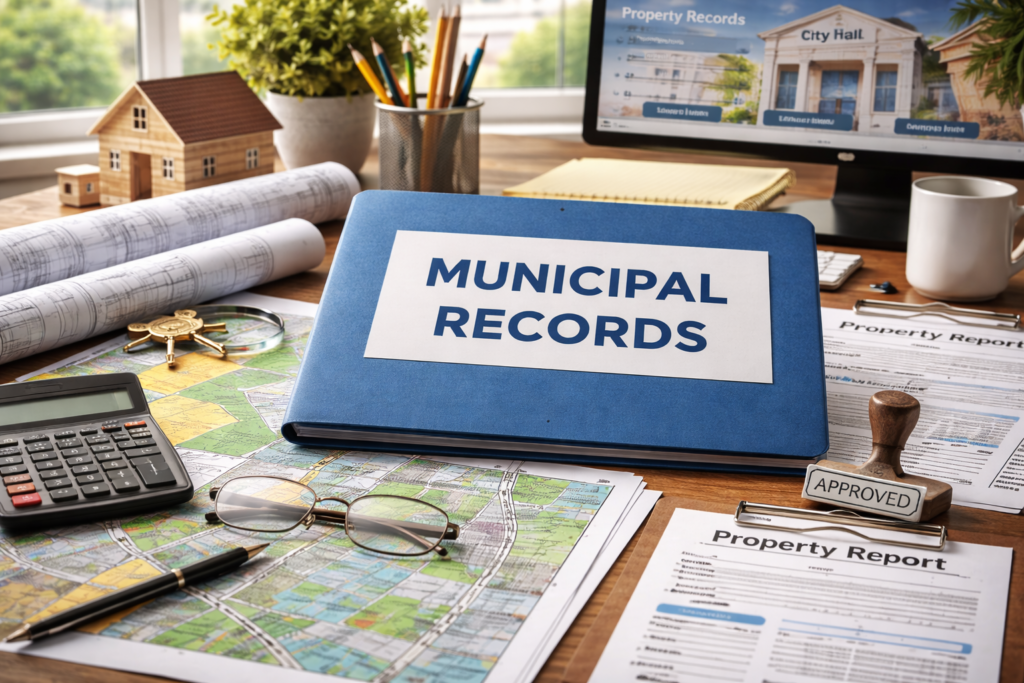
Municipal Records, Zoning and Compliance
Municipal Records, Zoning and Compliance: Essential Property Research for Real Estate Agents 3 CE Hours | On-Demand | Agents Advantage Real Estate Academy
Most real estate agents rely on MLS data and seller disclosures to describe a property — and most of the time, that works fine. But when it doesn’t, the problems are costly: deals delayed at closing, financing falling through, buyers blindsided by unpermitted work, and agents left managing a crisis that could have been caught weeks earlier.
This 3-hour on-demand course gives you a practical, systematic approach to researching property records before problems surface. You’ll learn exactly which municipal records to pull, where to find them, what to look for, and how to act on what you find.
What You’ll Be Able to Do After This Course
By the time you complete this course, you’ll know how to conduct a thorough, multi-department property records review from start to finish. Specifically, you’ll be able to:
Verify ownership and title history. You’ll know how to navigate the Town Clerk’s office and the Grantor/Grantee Index to confirm that the person selling the property has the legal authority to do so — and to identify ownership gaps, missing probate records, and undisclosed liens before they become closing-day surprises.
Read a property card and cross-check it against MLS data. You’ll be able to pull the assessor’s property card, interpret what it contains — including living area breakdowns, building sub-areas, ownership history, and land use codes — and spot discrepancies between the card and your listing before an appraiser or lender does it for you.
Explain taxes accurately to buyers and sellers. You’ll understand how mill rates work, how to calculate annual property taxes from assessed value, how assessment ratios relate to market value, and when a pending revaluation may affect a buyer’s budget or a seller’s timeline. You’ll be able to walk clients through tax proration at closing without relying on guesswork.
Identify unpermitted work and permit gaps. You’ll know how to search building department records for permit history, what to do when permits are missing or incomplete, and which types of improvements most commonly appear in a property without required approvals. You’ll understand the difference between work that needs retroactive permitting and work that may require an entirely different path.
Navigate zoning regulations and identify restrictions that affect value. You’ll be able to read zoning maps, identify use classifications, understand setback requirements, and recognize non-conforming uses that may limit a buyer’s plans. You’ll understand the difference between a variance and a special permit — including which one runs with the land and which one does not — and you’ll know what questions to ask before a client makes a purchase decision based on what they believe the property can do.
Research easements, deed restrictions, and liens. You’ll understand the three common types of easements, how to find them in land records, and how they can limit development, impact financing, or affect a buyer’s intended use of the property. You’ll also be able to identify certificates of lien, special assessments, and other encumbrances attached to the property at the time of sale.
Understand wetlands regulations and their impact on development. You’ll learn how inland wetlands rules work, what buffer zones mean for construction and expansion plans, and how to identify when a property may require additional permits before a buyer can make improvements. You’ll be able to set accurate expectations for clients purchasing properties near wetlands, streams, or floodplains.
Conduct a systematic, multi-department records review. The course walks you through a five-step research process — from ownership verification through conflict resolution — that gives you a repeatable framework you can apply to any property. You’ll know which departments to contact in which order, how to cross-check records for consistency, and how to resolve discrepancies when different offices have conflicting information.
What This Course Covers
The course is organized around the key municipal offices real estate agents interact with during a transaction, including:
- The Town Clerk’s Office: deeds, ownership history, easements, deed restrictions, and lien records
- The Assessor’s Office: property cards, tax maps, building classifications, improvement documentation, mill rates, and revaluation cycles
- The Tax Collector’s Office: current tax status, payment history, special assessments, prorations, and tax abatement programs
- Planning and Zoning: zoning maps and regulations, variances, special permits, setback requirements, overlay districts, non-conforming uses, and future development plans
- The Building Department: permits and applications, inspection records, certificates of occupancy, and code enforcement
- Inland Wetlands: regulatory framework, protected areas, buffer zones, and development restrictions
- Cross-departmental record flow and conflict resolution procedures
The course also covers the practical reality that departments don’t always communicate with each other — and what that means for agents who need to verify that the full picture is consistent before closing.
Who This Course Is For
This course is designed for licensed real estate agents at any experience level who want to conduct better property research and protect their clients from the kinds of issues that derail transactions. It is particularly useful for agents who regularly work with buyers conducting due diligence, agents who list properties with additions, renovations, or outbuildings, and agents who want to add property research competency to their professional practice.
The course is delivered entirely on-demand, so you can complete it on your own schedule. It is approved for 3 CE hours through Agents Advantage Real Estate Academy.
Agents Advantage Real Estate Academy is a CT DCP-approved continuing education provider.